Monday, February 7, 2011

HSTARC 2 : On Romanesque Architecture


As I’ve discussed in my presentation, Europe has produced Very wide variety of distinct styles but Romanesque architecture was the first one to spread across Europe since the Roman Empire. Romanesque structures is said to belong to a category of architecture known today as picturesque –so named for the elements that comprise a pleasing painting.


Romanesque Architecture was very much influenced by religion and as a result, this period was able to produce such stupendous cathedrals, churches and basilicas. As religion, the crusades and pilgrims spread, the architectural style went with it. I noticed some distinct characteristics that can be observed from Romanesque structures, and these are the its thick walls, round arches, sturdy piers, groin vaults, large towers and decorative arcading which were later on developed in the periods after. Functional planning and building skills improved during this period so they made sure each space had a particular use. They also gave importance to symmetry and proportion which is evident in their structures. It was in this period when people started using stone for ceilings instead of the simple wood which made it possible for them to create vaults which is one of the most important structural developments of the era and even became a major innovation in architectural features through the later centuries. The thick walls of their structures made them sturdy and able to stand till today. Only small windows can be used due to the weight of the stone ceiling to keep the walls as strong as possible. They had a wide variety of columns as well, infused the normal columns used during the Roman period with ornaments. The Romanesque church had an average height, but they aimed to build higher ones and encountered support problems which will be solved in the Gothic period.

Here in the Philippines, although our cathedrals are pretty much a mix of different architectural styles, we know that the Romanesque is the pioneer period of the creation of the great churches and cathedral. Although smaller compared to those in Europe, a good example would be the Cathedral Basilica of La Imaculada Concepcion, more popularly known as the Manila Metropolitan Cathedral which is one of the closest to Romanesque you will find in the country.  You can observe from the picture below that it has a symmetrical plan, ribbed vaults, corinthian columns, two aisles, transepts, an apse behind the altar and has small windows, and carvings on  the doors which depict biblical scenes.
https://blogger.googleusercontent.com/img/b/R29vZ2xl/AVvXsEgyK1IK4_Cn2LW3L6dmNf0iKXgaovbsHfv5og9d1LQY5tebL8BWvoM-_uenytG89_7NIm-mjIncOD8kXUniAX2sFxx8PjGB6D_hiUFPxZyrEuMM8Kt_FWfhTSx2bO3JF9s9fJ87szXzLY4i/s400/Manila+Cathedral.jpg

https://blogger.googleusercontent.com/img/b/R29vZ2xl/AVvXsEjYhMOpPx19K3S5chcpHYODr4HCPGYIk0gU62Fsd0hSee-0v2auSXjy96IzYwtfHvu4Tq_obxl6QEIjNsP224wcOLkoYNl-QOWKF7g-MqG5BDEYEcBW9kBhbNNQsNmeMlMI2izzSiQFObvV/s1600/Manila+Cathedral+door.jpg

https://blogger.googleusercontent.com/img/b/R29vZ2xl/AVvXsEiNm-KuGtknB3IPRV3uK1eVzManFYAqxVDukmkXY_Ge0UHvuvCAQmn3M-0WS68_0DrYTMDFVAU6YNNpc1E9GWqui2Kyoio5_4gYpHlTpTG0F4GMqWsxiEDlMRsmpSitJHXglnXGl3bhhY04/s400/Manila+Cathedral+interior.jpg

After reading about Romanesque architecture, I hit me more how past periods affect the next. I admire how well thought of their buildings are. Not only did they consider the functions of their structures and the spaces within, but also the aesthetics which to me are magnificent. It’s very admirable how well defined their structures are. Not only did it have very good aesthetics but had remarkable quality. They built structures that lasted hundreds of years that continue to awe men.

Thursday, February 3, 2011

THEDES 2: BLOG2

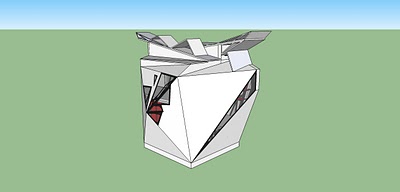
MYPod - DESPRN MIDTERM PROJECT


OUR PHILOSOPHY:

Using architecture to show the symphony of Pulchritude and utilitarianism.

OUR CONCEPT:

Sophisticated Metamorphosis

DESIGN CONCEPT:

The Butterfly Spectacle

WORKING CONCEPT

Transparency
Efficiency

Tuesday, January 18, 2011

THEDES2: MANIFESTO #2

My view of architecture hasn’t changed and just like what I’ve said in my first manifesto, I still enjoy the challenges each project faces me with. I want to be able to combine different forms to create aesthetically unique structures that can speak and affect humanity whilst assisting their needs. We as architects speak through our designs. I believe that form and function must always go together, neither one overtaking the other. After taking up Design Principles, I can say I’ve matured as an architecture student compared to how I was before entering this school. I’ve learned a couple of things which I know will be very useful in the future. I became more open to the different twists and turns in the design of our structures. I learned that no design is impossible, and that in the design process it’s always a trial and error so we should never be afraid to make mistakes while we are learning. This term, I know it wouldn’t be a smooth ride for me. But I’ll make it a point that I have fun, enjoy and absorb everything I learn. 

Wednesday, December 15, 2010

AFREHND: The Sundial @ The Fort


TOP: The original photos i took
BOTTOM: My original sketches
My edited sketch.


NOT YET FINAL!!!!


Saturday, November 20, 2010

Monday, November 1, 2010

AHSTARC : On Greek Architecture.

When I first heard the term Greek Architecture, the first few things that came into my mind were the majestic Parthenon located on the very impressive Acropolis. The Parthenon is known as the largest temple the Greeks build to honor Goddess Athena. The Acropolis as a whole on the other hand represents the high point in ancient Greek architecture. One can see that these Greek structures had very good proportions. Compared to the Egyptian structures, the Greek structures are very different when it comes to function, structure and aesthetics. If the Egyptians were more into the Function and Form of their buildings, the Greeks were conscious in their structures’ design and gave a big consideration to the aesthetics as well.  
Architecture continues to develop from one period to another. Egyptian architecture influenced the Greek’s in some way, like the use of columns which almost all Greek structures possess. What make the Greek’s different from the Egyptians is the elegance and the class their structures have. They devised a system of building proportions known as the Classical orders; the Doric, Ionic and Corinthian, that is timeless and widely used to this day.
It is evident in the Greek structures that people during that time gave importance to their social lives. Business was starting to emerge, physical activities were given importance, and a form of government was born. Each structure they built served a purpose. The Agora was built for socializing and business purposes, Bouleterion and Prytaneion were constructed for their local city council, theatre/Odeion was built for performing arts and the stadium, Hippodrome, Palaestra, Pyrataneion and Gymnasium were made for their physical games and exercises. Greek society was very active and comparable to ours nowadays. Just like any other civilization, the Greeks had their own beliefs. They had numerous Gods and goddesses whom they dedicated different temples for.  As time passed, Greek temples became larger and even grander.
Greek Architecture continued to evolve as years passed.  Their creativity led to the construction of some magnificent structures in history. Their architectural contributions were not only beneficial to their civilization but to the ones after them as well.

SKETCHES TO BE POSTED LATER :)

AHSTARC : On Egyptian Architecture


Compared to the previous periods in the history of architecture, the Egyptian period was indeed more blessed when it comes to resources around them. Materials such as timber, stone, papyrus, clay and fibre were readily available for them resulting to such matured art and architecture.  Stone started to replace mud as a primary material for building. It is amazing that they were able to come up with ways on how to balance stability and aesthetics well. An element of architecture that was evident in Egyptian architecture was the use of pillars which are still used today.
Egyptian Architecture portrayed great respect for religion, culture and their leaders. Since the Ancient Egyptians had strong belief in after-life, lasting Tombs and pyramids were built to preserve and honor their kings or pharaohs. Egyptians didn’t just bury the dead but they built monuments and tombs to make sure the bodies were safe which is still practiced until now. Temples were intricately built for cult practices and worship. Their beliefs and philosophies were strongly translated in their architecture and were put to life through their structures.  What amazes me the most about Egyptian Architecture is how they were able to construct structures in a way that these were able to withstand hundreds of centuries having some still stand to this day. They understood the proper use of materials and thought of ways to create very stable monumental structures which is reflected in the pyramids. I liked how they carved art; hieroglyphics and drawings into walls that told stories and probably helped the generations after them discover and learn about their grand civilization.
What is nice about the Egyptian Structures is that you will automatically feel the hard work Egyptians put into it just by looking at them. The Egyptian left a mark on history through their structures; the ones that still remain are indeed transcendent; wowing people generations after generations.


MORE SKETCHES TO BE POSTED TOMORROW. :)